
School or College Leaver? Not Sure What Career You Want? You’re Not Alone
Leaving school or college is a big moment, especially here in the UK. Whether it is the summer after exams or you are watching friends head off to university, that familiar question tends to pop up more often than you would like:
“So… what are you going to do next?”
If your honest answer is, “I am not completely sure yet,” that is entirely normal.
Most people do not discover what truly suits them until they have explored their options, gained insight into how businesses operate, and developed practical skills in the real world.
That is exactly why National Careers Week is so valuable. It creates space to reflect, explore and take a confident next step. You can find out more about the initiative and its aims on the official website here:
https://nationalcareersweek.com/
One pathway worth considering is finance and accounting.
Why Finance and Accounting Is a Strong Career Foundation
Even if you’re not certain finance is your long-term destination, it provides a solid, structured foundation for many directions.
You Develop Transferable Skills
Understanding budgeting, reporting, financial processes and business performance is valuable in almost every industry.
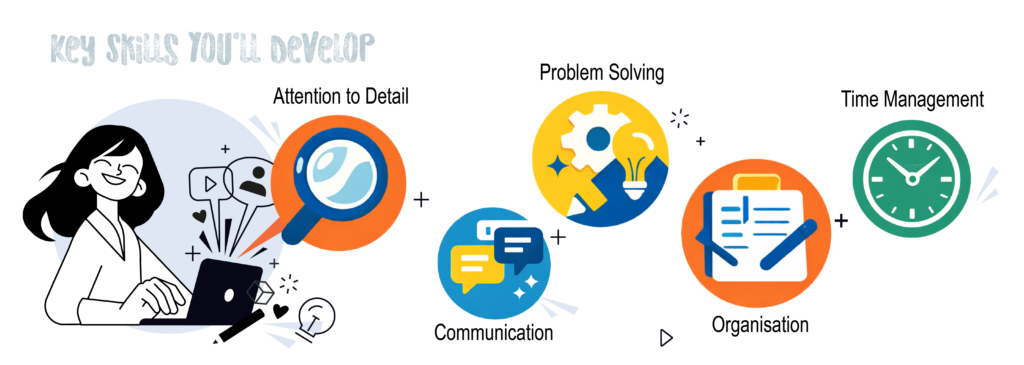
Key skills developed through professional study include:
- Attention to detail
- Organisation
- Communication
- Time management
- Problem solving
- Commercial awareness
These are skills that stay with you — whether you remain in finance or move into management, consultancy, operations or even run your own business.
Clear and Recognised Progression
Professional qualifications such as those awarded by the Association of Accounting Technicians (AAT) provide structured progression from entry-level bookkeeping through to advanced accounting.
The AAT qualification framework is widely recognised by employers across the UK and internationally. If you would like to understand more about how AAT qualifications are structured and where they can lead, you can explore the official AAT website here:
https://www.aat.org.uk
Each level builds logically on the last, meaning you can see exactly where you are and what your next step looks like.
For many learners, that clarity feels reassuring.
Flexible Study Around Your Life
Unlike traditional full-time study, distance learning allows you to:
- Study at your own pace
- Fit learning around work or family commitments
- Progress without relocating
- Maintain financial independence
This flexibility makes finance qualifications accessible whether you are 18 or 48.
You stay in control of your timeline.
But What About AI? Is Finance Still a Safe Career Choice?
It’s a fair question.
Technology has always shaped the finance profession. Spreadsheets replaced manual ledgers. Cloud software replaced paper records. Automation now handles certain routine tasks.
Yet finance roles haven’t disappeared. They’ve evolved.
AI can process data quickly. It cannot replace:
- Professional judgement
- Ethical responsibility
- Regulatory accountability
- Clear communication of financial insight
- Strategic decision-making
In fact, as technology improves, the need for professionals who understand and interpret financial information becomes even more important.
The future of finance is not about competing with technology — it’s about working alongside it.
Is a Career in Finance Right for You?
You don’t need to be exceptional at maths.
You do need to be comfortable with numbers and willing to learn.
Qualities that often suit finance learners include:
- An appreciation for structure
- A logical mindset
- An interest in how businesses operate
- Reliability and attention to detail
- A desire for recognised qualifications
If that sounds like you, it’s worth exploring further.
A Balanced Look at the Challenges
No career path is perfect, and it’s important to be realistic.
It Takes Commitment
Studying alongside work or other responsibilities requires discipline. Exams require preparation. Progression is earned.
However, the sense of achievement when you pass and move forward is significant.
Early Roles Can Be Detail-Focused
Entry-level finance positions often involve processing transactions, reconciliations or reporting tasks. These are essential foundations, even if the bigger strategic picture becomes clearer over time.
Progression Is Gradual
Finance is a profession built on trust and competence. Growth comes steadily as you gain experience and qualifications.
The advantage is that each step builds credibility.
What If You Change Your Mind?
One of the biggest concerns when choosing a pathway is picking “the wrong one.”
In reality, very few experiences are wasted.
Even if you later move into another field, you’ll still have:
- Recognised qualifications
- Practical business knowledge
- Transferable professional skills
- Evidence of discipline and commitment
Those are valuable in almost any sector.
How Accountancy Learning Supports Distance Learners
At Accountancy Learning, we understand that choosing a career direction can feel significant — particularly if you’re studying independently.
Our distance learning programmes are designed to provide:
- Structured, clearly sequenced course materials
- Qualifications such as AAT
- Ongoing tutor support
- Practical assessments aligned with workplace skills
- Clear progression routes
If you would like to explore the full range of distance learning accounting and bookkeeping courses available, you can view our courses here:
https://www.accountancylearning.co.uk/dl/courses/
We support learners across the UK, helping them build confidence alongside technical knowledge.
Whether you’re taking your first step into finance or formalising existing experience, the goal is the same: steady, supported progress.
Final Thoughts
If you’re feeling uncertain about your next move, that’s completely normal.
National Careers Week is not about having all the answers. It’s about exploring sensible, realistic pathways.
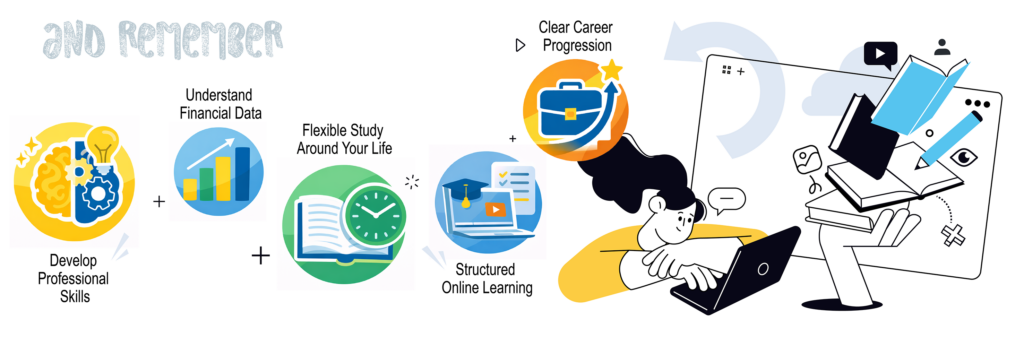
A career in finance offers:
- Clear progression
- Recognised qualifications
- Transferable skills
- Long-term professional stability
- Flexibility through distance learning
You don’t need your entire future mapped out.
You simply need a positive first step.
If you’d like to explore your options or ask a question, our team is here to help you make informed, confident decisions.
Call us on 01392 435349 or email [email protected]